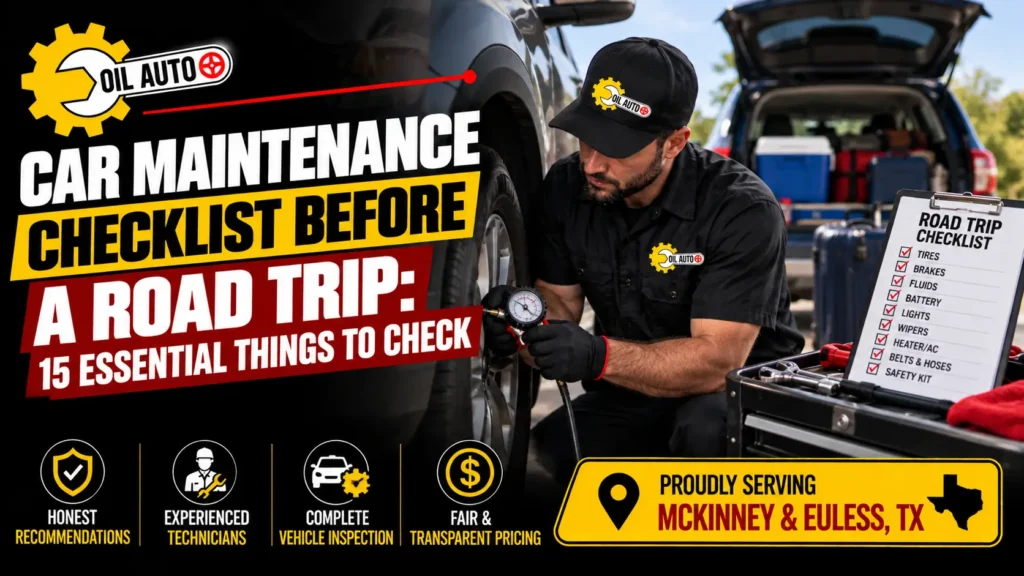
Planning a road trip across Texas or heading out of town for a holiday weekend? Before loading your luggage and getting on the highway, take time to make sure your vehicle is ready for the journey. A small maintenance issue that goes unnoticed at home can become a major inconvenience when you are miles away from the nearest repair shop.
Following a car maintenance checklist before a road trip helps you identify potential problems with your tires, brakes, fluids, battery, and other essential systems. It also gives you an opportunity to address overdue maintenance before spending hours on the road.
Whether you drive around McKinney, commute through Euless, or plan to travel across multiple states, these 15 checks can help you prepare for a safer, smoother journey.
15 Essential Things to Check Before a Road Trip
Use this pre-trip vehicle inspection checklist several days before departure. This leaves enough time to arrange repairs if you discover a problem.
1. Check Tire Pressure
Incorrect tire pressure can affect handling, braking, tire wear, and fuel efficiency. Check all four tires when they are cold and inflate them according to the pressure listed on the driver’s door-jamb label or in your owner’s manual.
Do not use the maximum pressure printed on the tire sidewall as your vehicle’s recommended setting. If you are carrying additional passengers or heavy luggage, check the manufacturer’s guidance for your load.
2. Inspect Tire Tread and Condition
Look for uneven tread wear, cracks, bulges, exposed cords, or other visible damage. Tires with insufficient tread can struggle to maintain traction, particularly on wet roads.
Check the spare tire if your vehicle has one. If the tread is excessively worn or damage is visible, have the tire evaluated before traveling.
3. Test the Brakes
Your brakes should respond consistently without grinding, squealing, or unusual vibration. A brake pedal that feels unusually soft, sinks toward the floor, or requires extra pressure needs professional attention.
Do not ignore brake warning lights or unusual noises. A long highway journey puts repeated demands on your braking system, especially in heavy traffic and hilly areas.
4. Check Engine Oil
Engine oil lubricates moving parts, reduces friction, and helps protect the engine from wear. Check the oil level according to your owner’s manual and look for signs of a leak.
If your next oil change is due before or during the trip, schedule it beforehand. You can review the available routine maintenance services to understand how oil changes and other preventive checks fit into your vehicle’s maintenance schedule.
5. Inspect Coolant Levels
Coolant helps regulate engine temperature, which is especially important during hot Texas weather and extended highway driving. Check the coolant reservoir when the engine is completely cool.
Look for signs of leaks, low coolant, or a history of overheating. Never open a hot, pressurized cooling system. If coolant levels repeatedly fall or the temperature gauge rises unusually high, have the system inspected before setting off.
6. Check Other Essential Fluids
Engine oil and coolant are not the only fluids that matter. Depending on your vehicle, check brake fluid, transmission fluid, and power steering fluid where applicable.
Also verify that windshield washer fluid is filled. Low fluid levels, unusual discoloration, or visible leaks may indicate a problem that needs attention.
7. Inspect Belts and Hoses
Look for visibly cracked belts, deteriorating hoses, loose connections, or signs of fluid seepage. Belts help drive important engine accessories, while hoses carry coolant and other fluids throughout the vehicle.
Some damage is difficult to spot without specialized knowledge. If you hear squealing noises or notice leaks, unusual smells, or previous overheating, arrange an inspection before traveling.
8. Test the Battery and Charging System
A weak battery can leave you stranded at a fuel station, hotel, or roadside stop. Check for corrosion around accessible battery terminals and pay attention to slow engine cranking or repeated starting problems.
If the battery is several years old or has recently struggled to start the vehicle, have its condition and charging system tested. A battery warning light should also be investigated before departure.
9. Test All Exterior Lights
Check the headlights, brake lights, turn signals, hazard lights, and reverse lights. Proper lighting helps you see the road and makes your vehicle more visible to other drivers.
Ask someone to help you verify the lights or use a safe reflection to check them. Replace defective bulbs and address electrical faults before traveling at night.
10. Inspect Windshield Wipers and Glass
A clean, undamaged windshield is essential for visibility. Check the glass for cracks that may obstruct your view and inspect the wiper blades for splitting, streaking, or ineffective wiping.
Refill the washer reservoir and ensure the spray nozzles work properly. Sudden rain, road spray, and dust can reduce visibility quickly, so this simple check should not be overlooked.
11. Test the Air Conditioning, Heater, and Defroster
Texas weather can change, and cabin temperature control is important during long drives. Verify that your air conditioning cools effectively, your heater works when needed, and your defroster clears windshield condensation.
If the airflow is weak, the temperature is inconsistent, or unusual odors develop, investigate the issue before traveling. A windshield that cannot be cleared effectively can become a serious safety hazard.
12. Check Air Filters
A heavily clogged engine air filter can restrict airflow to the engine, while a dirty cabin air filter can reduce ventilation inside the vehicle.
Check both filters according to the manufacturer’s maintenance recommendations. Replacing them when necessary can support proper airflow and improve cabin comfort during a long journey.
13. Pay Attention to Steering and Suspension
Your vehicle should track predictably without excessive vibration, pulling to one side, or unusual clunking sounds. These symptoms may indicate tire, alignment, steering, or suspension problems.
If you notice handling changes, have the underlying cause diagnosed rather than attempting to compensate while driving. Proper steering and suspension condition helps maintain vehicle control.
14. Confirm Fuel or Battery Charge and Plan Your Route
Before departure, make sure you have enough fuel or battery charge for your planned route. Identify reliable fuel stations or charging locations, particularly when traveling through unfamiliar areas.
Review traffic, weather forecasts, road closures, and potential detours. Keep navigation information accessible, but never operate your phone while driving. For longer trips, plan regular rest stops to avoid fatigue.
15. Check Your Registration, Insurance, and Vehicle Documents
Keep your driver’s license, vehicle registration, and proof of insurance accessible. Review roadside assistance details and store relevant emergency contacts on your phone.
If your trip involves crossing state lines, verify whether any vehicle-related requirements apply to your destination or route. Keeping essential documents organized saves time if you need assistance during the journey.
What to Keep in a Car Emergency Kit
Even a properly maintained vehicle can experience a breakdown or unexpected tire problem. Packing an emergency kit is an important part of holiday travel car safety tips, particularly when driving long distances.
Consider including the following items:
- A first-aid kit and necessary personal medications.
- A flashlight with spare batteries or a fully charged rechargeable light.
- Jumper cables or a compatible portable jump starter.
- A tire pressure gauge, portable inflator, and appropriate tire-changing tools.
- A spare tire, if supplied with your vehicle, and the necessary jack and lug wrench.
- Drinking water, nonperishable snacks, and a basic supply of paper towels.
- A phone charger, power bank, and roadside assistance information.
- Reflective warning triangles or other appropriate roadside visibility equipment.
- Basic tools, work gloves, and a blanket.
- Extra windshield washer fluid and weather-appropriate clothing.
Store items securely so they do not move around while driving. Know how to use your emergency equipment before leaving home, and avoid attempting roadside repairs in an unsafe location.
When to Get a Professional Pre-Trip Inspection
A visual check is useful, but it cannot identify every mechanical problem. If your vehicle has warning lights, fluid leaks, unusual noises, braking concerns, or overdue maintenance, arrange a professional inspection before departure.
Drivers looking for a pre-trip inspection in McKinney, TX, or road trip car service in Euless, TX, can explore the maintenance and repair options offered by Oil Auto Plus. The company provides maintenance services for essential systems, including tires, brakes, batteries, fluids, belts, and hoses.
Regular preventive maintenance can help identify developing problems before they interrupt your travel plans. You can learn more about the company’s approach to vehicle care on the About Oil Auto Plus page.
If a recommended repair creates an unexpected expense, review the available financing information and current service specials when planning your maintenance budget.
To find the nearest facility, check the McKinney and Euless locations. Additional guidance on vehicle maintenance is also available through the Oil Auto Plus blog, while the company’s homepage provides an overview of its automotive services.
FAQs
1. What should I check before a long drive?
Check tire pressure and tread, brakes, engine oil, coolant, other essential fluids, battery condition, exterior lights, wipers, and air conditioning. Also inspect belts and hoses, verify that the steering and suspension feel normal, and pack an emergency kit. Resolve safety-related concerns before departure.
2. How many days before a road trip should I service my car?
Ideally, arrange a professional inspection about one to two weeks before a major trip if your vehicle needs maintenance or repairs. This provides time to order parts and address unexpected problems. Simple visual checks can be repeated the day before departure.
3. Is a pre-trip vehicle inspection necessary if my car is serviced regularly?
Regular maintenance reduces the risk of unexpected problems, but tires, fluid levels, lights, and other components can change between service appointments. A pre-trip check helps identify issues that may have developed since the last visit, particularly before a long journey.
4. What should I keep in a car emergency kit?
Include a first-aid kit, flashlight, jumper cables or a jump starter, tire-changing equipment, drinking water, snacks, a phone charger, warning triangles, and basic tools. Add necessary medication, weather-appropriate clothing, and roadside assistance information based on your route and travel needs.
5. Where can I get a pre-trip inspection in McKinney or Euless, TX?
Oil Auto Plus provides vehicle maintenance and repair services at its McKinney and Euless locations. Drivers can review the company’s service options and location details to identify the appropriate facility for their vehicle.
6. What should I do if I discover a problem before leaving?
Address safety-related problems before starting your journey. Tire damage, brake issues, overheating, fluid leaks, and warning lights may indicate conditions that require professional diagnosis. If the vehicle is unsafe to drive, arrange assistance rather than risking a breakdown on the road.